What Happens to Your Body After Anesthesia — And Why You Shouldn't Be Alone
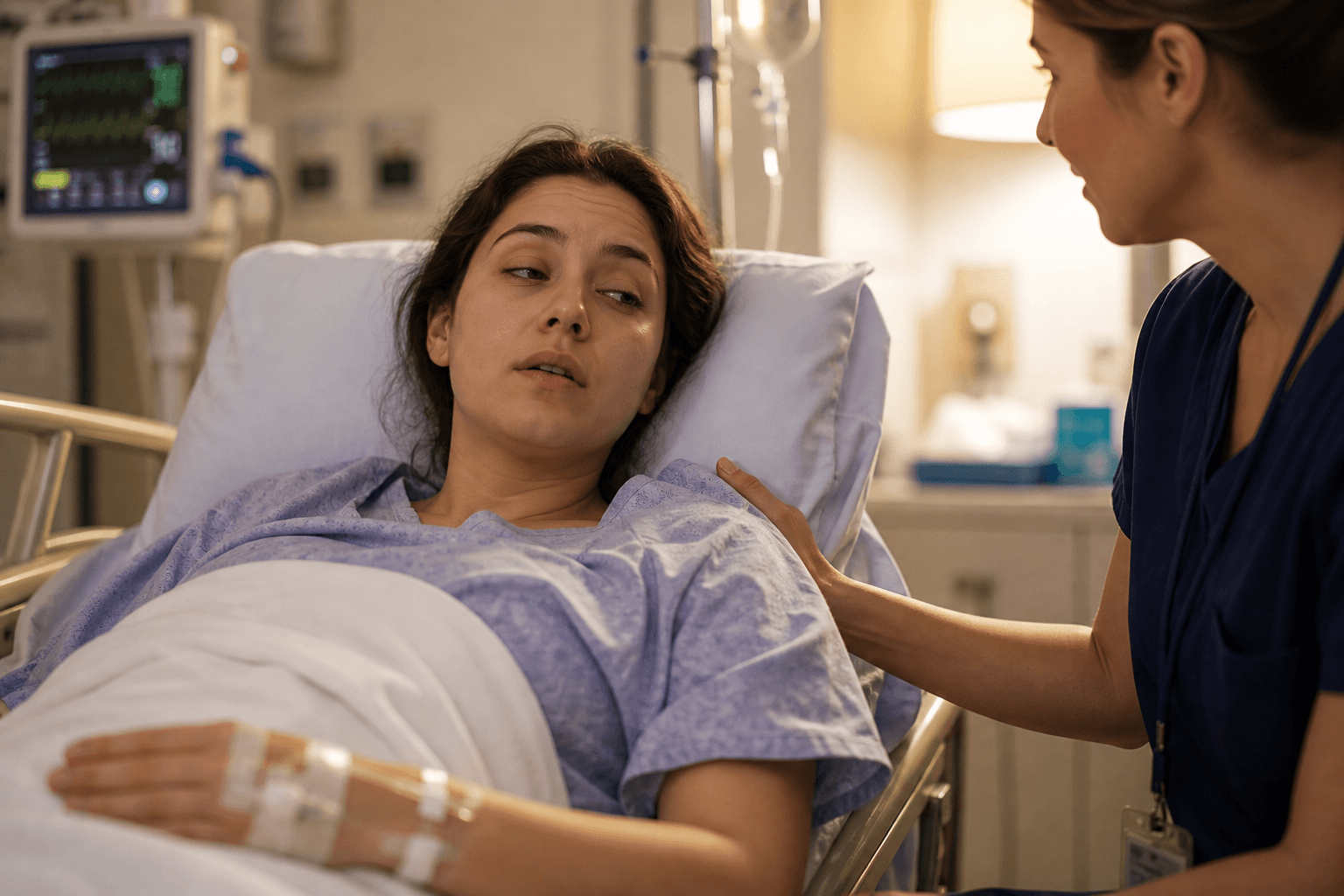
You wake up in recovery. The nurse checks your vitals. You feel surprisingly okay. Your first thought: "I'm fine. I can handle this."
You're not fine. Not yet. And the dangerous part is, you can't tell.
What Anesthesia Actually Does to Your Body
Anesthesia is not sleep. It's a medically induced state that temporarily suspends your brain's ability to process pain, form memories, and regulate basic functions. When the procedure ends, those drugs are reversed — but not instantly eliminated.
In the first 2–4 hours after surgery, your body is still processing residual anesthetic agents:
Impaired judgment: Decision-making takes 12–24 hours to fully return. You cannot accurately assess your own condition because the same drugs affecting your brain also impair your ability to know your brain is impaired.
Slowed reflexes: Reaction time drops by up to 50%. A child runs into the street. You react at half capacity. That half-second delay causes accidents.
Cognitive gaps: Many patients hold full conversations they won't remember an hour later. Short-term memory formation is among the last functions to recover.
False recovery window: Between 4–8 hours post-surgery, many patients feel "back to normal." This is when most home accidents happen. The impairment is real but subtle, and patients consistently overestimate their ability to function.
Nausea risk: 20–30% of patients experience post-anesthesia nausea and vomiting. Alone and sedated, this becomes a choking hazard.
Why "I Feel Fine" Is the Most Dangerous Feeling
Post-anesthesia impairment is uniquely deceptive because it impairs self-assessment, your brain's ability to judge its own state. Metacognition is compromised by the same drugs that affect everything else.
This is why every surgical facility in Florida requires a responsible adult escort at discharge. It's not a formality. It's a medical requirement rooted in documented patient safety data. And it's not about the drive home — the risk doesn't end at your front door.
What Can Go Wrong at Home
Studies show that patients without adequate post-operative supervision have significantly higher rates of complications in the first 24 hours. The most common incidents:
Falls: The leading cause of post-surgical injury at home. Impaired balance combined with getting up from bed or a chair is a predictable hazard. Older patients are especially vulnerable.
Medication errors: Post-surgery pain medications are often opioids or strong NSAIDs. A cognitively impaired patient may take the wrong dose, forget they already took a dose, or mix medications unsafely.
Missed emergencies: Excessive bleeding, unusual swelling, difficulty breathing, and high fever require immediate action. A disoriented patient may not recognize them as emergencies or may wait too long to call.
Aspiration: Vomiting while drowsy can lead to inhaling stomach contents. Rare, but serious, and preventable with someone present.
How Long Do You Actually Need Someone With You?
The honest answer depends on the procedure and type of anesthesia, but as a general guide:
Minor outpatient procedure with sedation: 4–6 hours minimum
General anesthesia, outpatient: 12–24 hours recommended
Longer procedures or patients over 65: up to 48 hours
Your discharge paperwork will include specific instructions. Follow them; they're based on your exact procedure and anesthetic protocol.
What You Actually Need
Not just a driver. Someone present, alert, and trained:
Stays with you through the full recommended window
Manages your medications and timing
Knows the difference between normal post-op drowsiness and something that needs attention
Can make clear decisions if something changes
A well-meaning friend who drops you off and leaves doesn't cover this. Neither does someone who's there physically but doesn't know what to watch for.
The Solution: A Trained Post-Surgery Companion
MyAppointmentPal provides exactly this for Orlando patients:
✅ Present at discharge to receive instructions with the nursing staff
✅ Drives you home safely
✅ Monitors you during the critical recovery window
✅ Manages medications, mobility, and first meals
✅ Knows when to call your surgeon—and when to call 911
You went through surgery. Let someone qualified handle the next 24 hours.
Book Your Post-Surgery Companion → https://www.myappointmentpal.com/
————————————————————————————————————-
Frequently Asked Questions
How long does anesthesia stay in your system?
Most anesthetic agents are substantially cleared within 24 hours, but cognitive and motor effects—impaired judgment, slowed reflexes, and a false sense of recovery—can persist up to 48 hours. Older patients and those with liver or kidney conditions may take longer.
Can I be alone after sedation if I didn't have general anesthesia?
No. Even with IV sedation or monitored anesthesia care (MAC), you should not be alone for at least 4–6 hours. The same cognitive impairment and fall risks apply.
What are the warning signs to watch for after surgery?
Call 911 for difficulty breathing, chest pain, excessive bleeding, fever over 101.5°F, or unresponsiveness. Call your surgeon for a mild fever, uncontrolled pain, redness at the surgical site, or vomiting that won't stop.